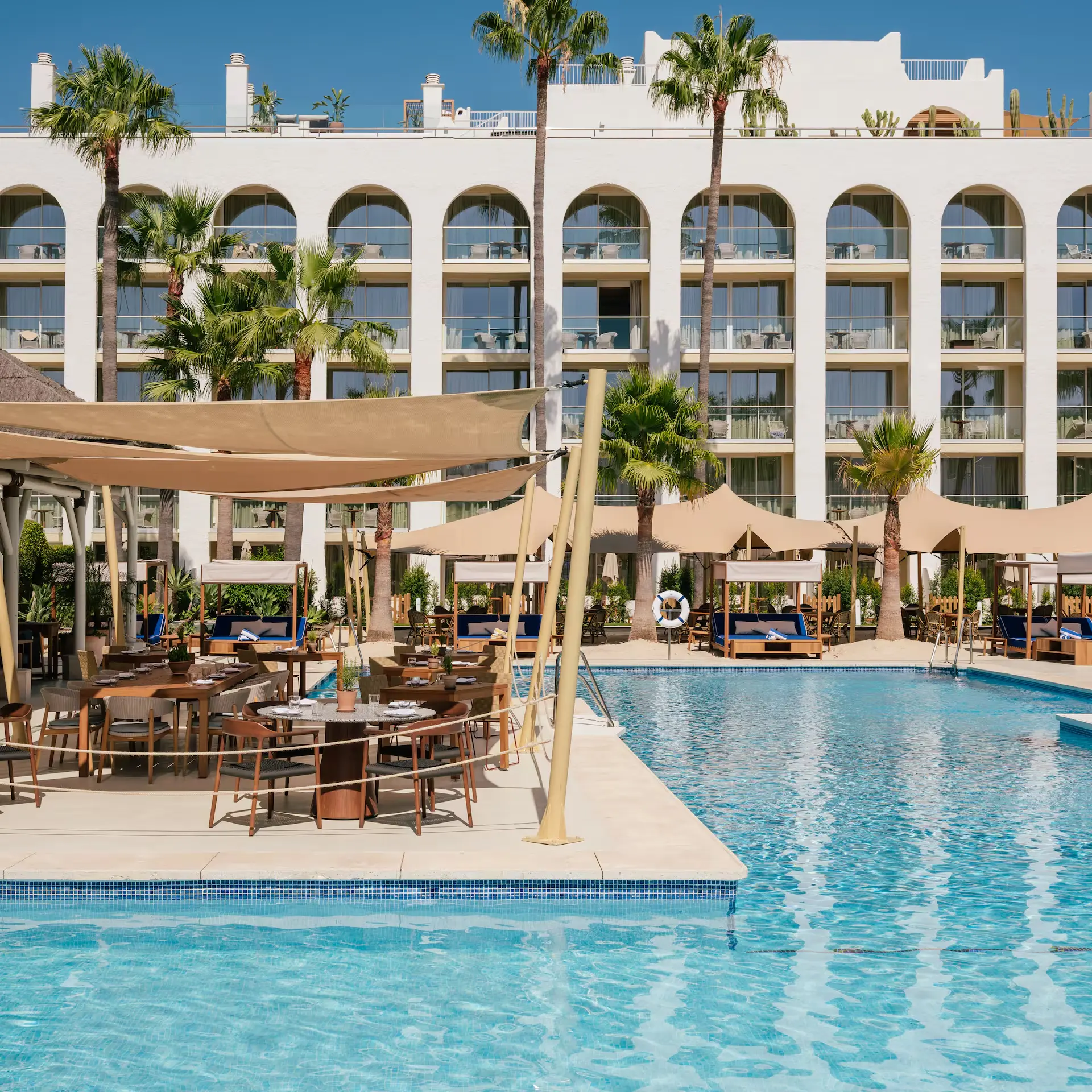
ME Málaga: A Design-Forward Stay in the Heart of Andalusia's Most Underrated City
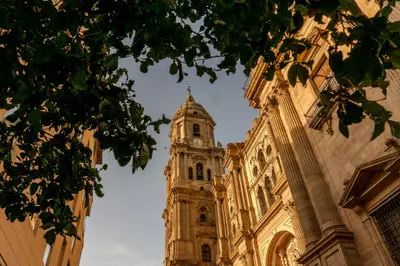
For years, Málaga was the city travellers passed through on the way to somewhere else. The Costa del Sol's beach towns to the west, Granada's Alhambra to the north, Seville's flamenco bars further inland. Málaga was the airport. The transit point. The place you spent forty minutes in before heading on.
That has changed, and I'd argue it has changed more dramatically than almost any other Spanish city in the last decade. Málaga today is the cultural capital of Andalusia, with more museums per square kilometre than most European capitals, a restored old town that rewards aimless wandering, and a food scene that quietly competes with anywhere in Spain. It is also where I stayed at my favourite of three hotels on a recent trip through the region: ME Málaga, a property that feels less like a hotel and more like a curated apartment building you happen to be invited into.
If you are planning a trip to Andalusia and trying to decide where to base yourself, this is the case for spending more time in Málaga than you originally thought you would, with ME Málaga as your home for it.
Why Málaga, and Why Now
Málaga is, somewhat improbably, the birthplace of Pablo Picasso. The house where he was born in 1881 is now the Casa Natal, a small but thoughtfully curated museum on the Plaza de la Merced, and yes, it sits directly across from the hotel I'm about to tell you about. The city trades on this connection (rightly so), but Picasso is only the headline act. The Museo Picasso Málaga, set inside a sixteenth-century palace, holds more than two hundred works. The Centre Pompidou Málaga, a satellite of the Paris original, sits in a glass cube on the port. The Museo Carmen Thyssen specialises in nineteenth-century Spanish painting. There is also a museum of automobiles, a museum of glass, a museum of contemporary art, and an entire wing of the Russian State Museum (yes, in Málaga).
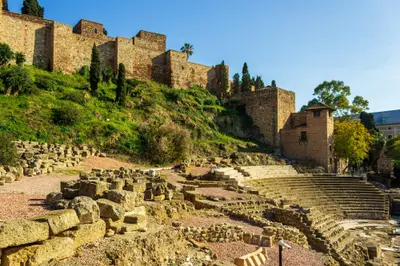
This density is not an accident. Málaga's local government made a deliberate, sustained bet on culture as the city's identity, and it has paid off. Walk through the old town today and you'll find restored Phoenician walls, the Roman theatre at the foot of the Alcazaba, and the eleventh-century Moorish fortress itself, all within a five-minute radius. The history goes back nearly three thousand years, and you can feel it pressing up through the cobblestones.




Photography: Natasha Hardy / The Uncommon Traveller
The food has caught up too. Málaga sits on the eastern edge of the Costa del Sol, where the Mediterranean gives the city espetos (sardines skewered on bamboo and grilled over open flame at beachfront chiringuitos), boquerones (the fresh, briny anchovies the city is named for, in the local etymology) and gambas blancas. Inland Andalusia gives it olive oil, jamón ibérico de bellota, and the sweet wines of the Axarquía. The result is a kitchen that pulls from sea and mountain in equal measure.
This is why the city deserves more than a layover, and why a hotel that anchors you in the right part of it matters.
ME Málaga: First Impressions
ME Málaga (opens in new tab) sits on the Plaza de la Merced, which is to Málaga what Place des Vosges is to Paris. The square is leafy, lined with cafés, and crucially, pedestrianised. You will not arrive by car. You will not need one. Step out the front door and you are within walking distance of the old town, the Cathedral, the port (now the Muelle Uno, a redeveloped marina with restaurants and the Pompidou), and the beach at La Malagueta. This is the practical case for the hotel before any of the design or service comes into it: location like this is rare, and in Málaga specifically, it is the difference between a good trip and a great one.
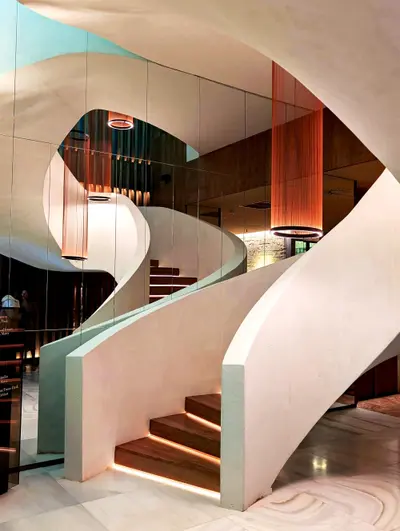
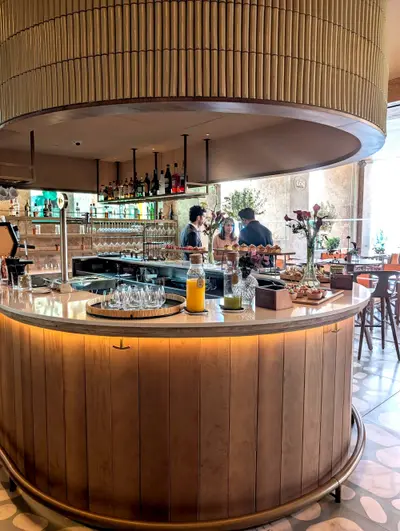
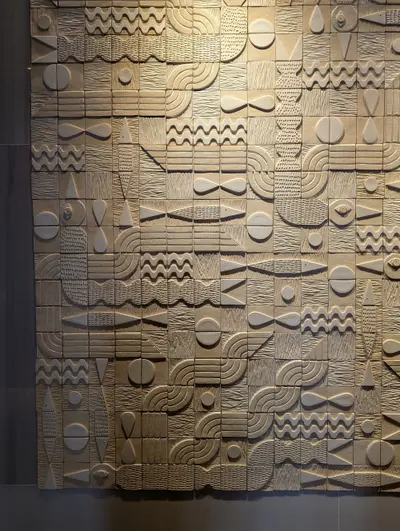
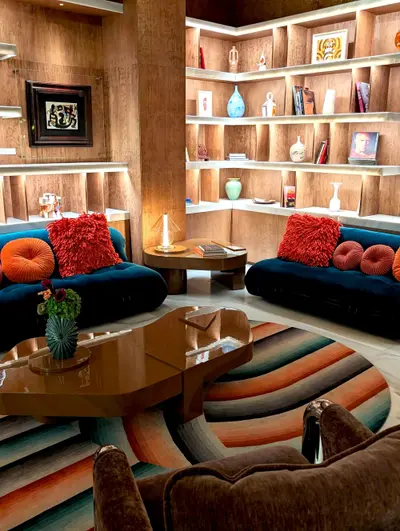
The lobby tells you immediately what kind of property this is. There is a bar at the front, with tables spilling onto the plaza, serving cocktails and small plates throughout the day. Further in, the check-in area opens up into a sitting room I'd happily wait in for an hour. Above it, a spiral staircase curls upward toward the gym and event spaces on the floors above. The first thing that struck me, before I'd even checked in, was the mural by Marina Anaya in the entrance. It became my favourite piece of art in the entire hotel, and I saw a lot of art there.
Photography: Natasha Hardy / The Uncommon Traveller
The Design Language
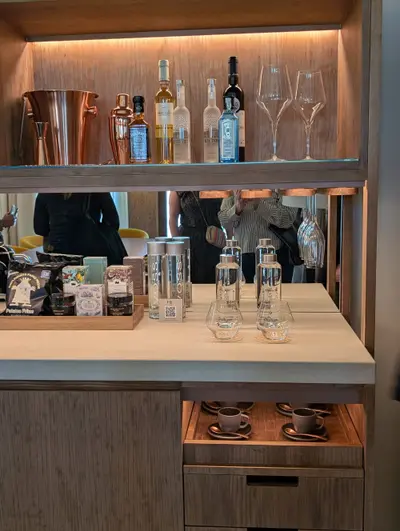
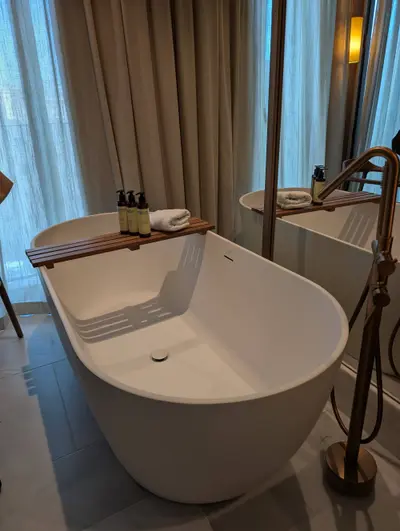
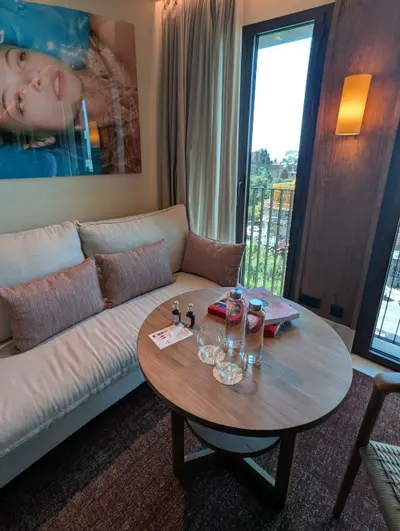
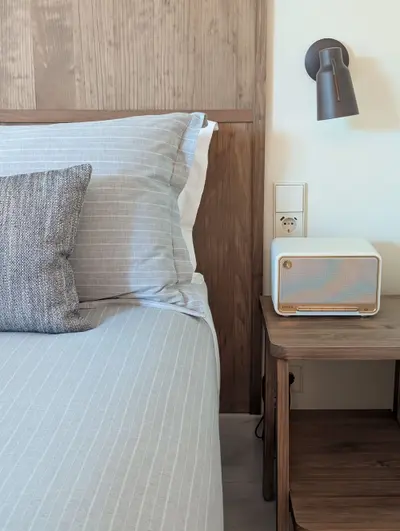
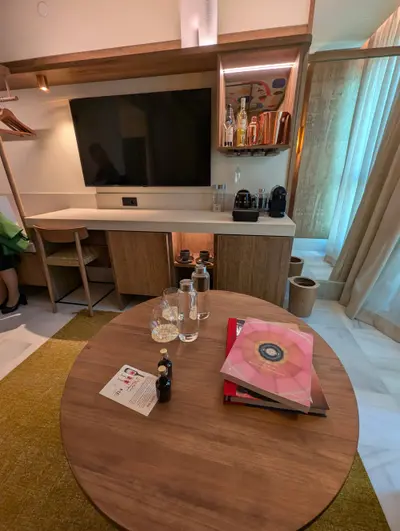
ME hotels are part of the Meliá portfolio, and they tend to operate in a particular register: design-forward and somewhere between a boutique hotel and a lifestyle brand. ME Málaga executes this without falling into the traps the genre often falls into (cold lobbies, design over function, a slight feeling that you are intruding on someone else's photograph).

Photography: Natasha Hardy / The Uncommon Traveller
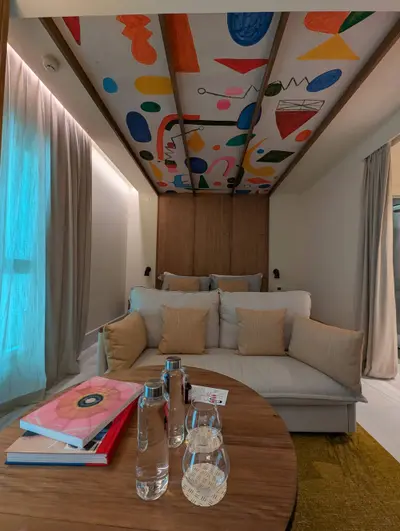
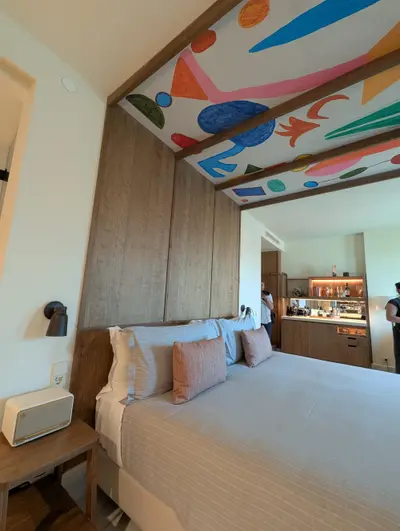
The base palette of the rooms is beige, warmed up with wood furniture and pops of accent colour. The bed linens and curtains are linen, which sounds like a small thing until you've slept on linen sheets in Andalusia in summer and understand exactly why it matters. The real signature, though, is overhead. Every room has a painted ceiling above the bed, original work by Rafa García, a Malagueño artist who has shown internationally and was commissioned specifically for the hotel. You lie down, you look up, and there is a piece of contemporary art that exists nowhere else. It is the kind of detail that is genuinely difficult to do well, and ME Málaga has done it.
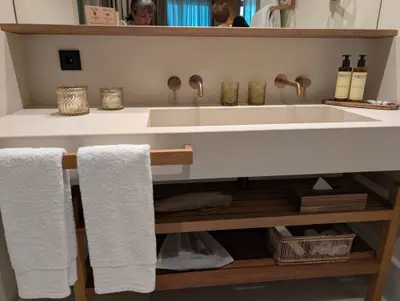
Sustainability runs through the property in a way that does not feel performative. The keycard has been replaced by a bamboo bracelet you scan at the door (you take it home, which is nice). Toothbrushes are wooden. Plastic water bottles have been replaced with paper ones for the road and glass for the room. The building is powered by solar panels. The toiletries are refillable. None of this is announced with a heavy hand. You notice it slowly, by what is absent rather than what is present, and that is the right way to do it.
The Rooftop
If the lobby is the property's calling card, the sixth-floor rooftop is its argument. The view stretches across the rooftops of the old town, with the Alcazaba rising on the left and the Mediterranean glinting beyond the port on the right. There is a heated pool for the cooler months, sun loungers spread across the terrace, and a restaurant called Cañitas Maite that serves a menu of Andalusian classics done well. I'd happily eat the pan con tomate and a glass of vino fino as a complete meal, repeatedly, for several days.
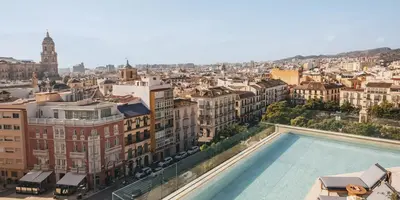
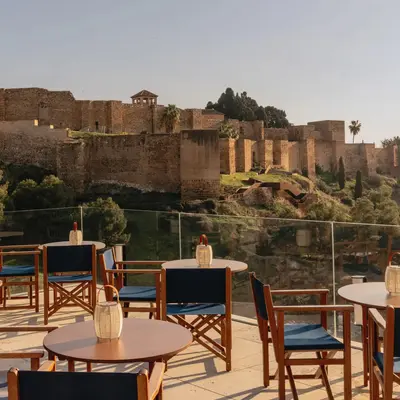
This is the kind of rooftop that is genuinely usable rather than ornamental. You can have breakfast there, work from there in the late morning, swim in the afternoon, and watch the sunset from a lounger with a cocktail. The view at golden hour, when the city turns the colour of warm terracotta and the Alcazaba's stone catches the last of the light, is the kind of moment you remember a year later.
The Practical Notes
A few things worth knowing if you are considering a stay:
- The hotel has interconnecting rooms in sets of three, with a private hallway that closes off from the main corridor. This is genuinely useful for multi-generational families or groups travelling together, and it is rare. Most hotels offer two-room connections. Three is a different proposition entirely.
- The pedestrian zone around the hotel means deliveries, taxis, and ride-shares drop you at the edge of the plaza rather than the front door. This is not a complaint, it is the trade-off for staying in the heart of the old town, and it is worth it.
- I would not bring a car. I would actively recommend against it. Parking in central Málaga is difficult, expensive, and pointless given how compact the city is. If you are doing day trips (and you should be, more on this below), take the train or hire a car for the day from one of the rental desks at María Zambrano station.
When booking ME Malaga with us, you will automatically get the following perks added to your stay - at no extra cost:
- Daily breakfast for two per room
- $100 USD hotel credit (once per stay), subject to a 3-nights minimum length of stay
- VIP welcome amenities
- Guaranteed early check-in at 10 a.m. OR late check-out at 4 p.m. at the time of reservation
- 20% extra MeliaRewards points per Suite or Villa booking.
- Priority for requested room category, bed type, rollaway beds, and connecting rooms
Eating Around the Hotel
This is where ME Málaga's location becomes a gift. The streets radiating off the Plaza de la Merced and toward the Cathedral are some of the densest restaurant streets in Andalusia, with everything from Michelin-starred kitchens to centuries-old taverns within a ten-minute walk.
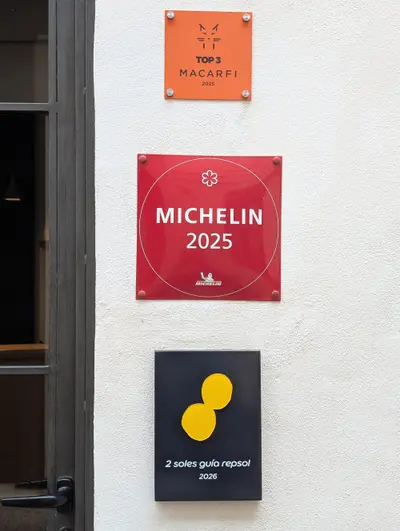
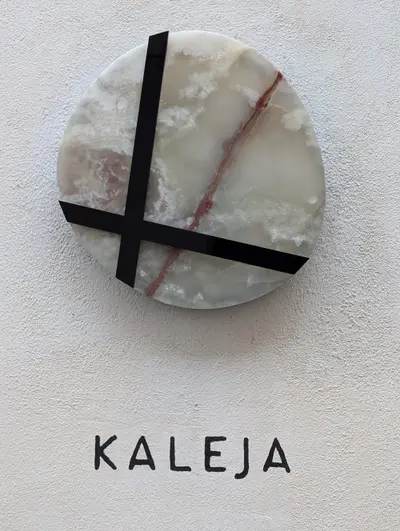
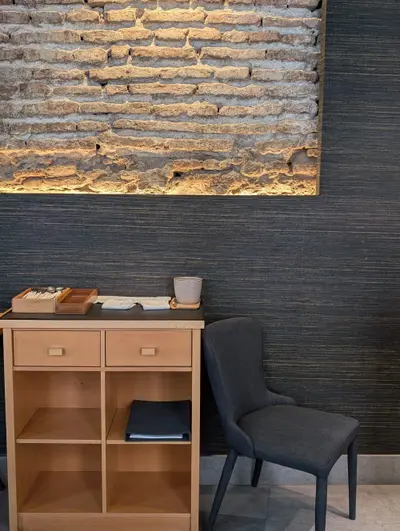
Photography: Natasha Hardy / The Uncommon Traveller
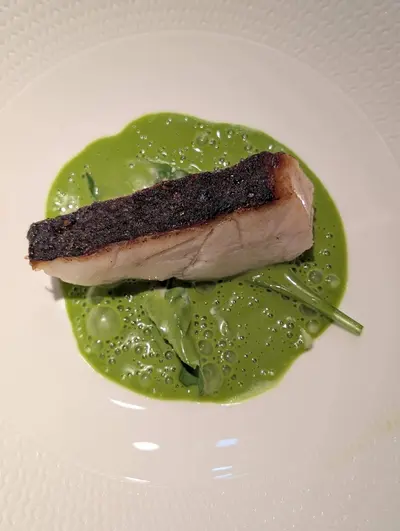
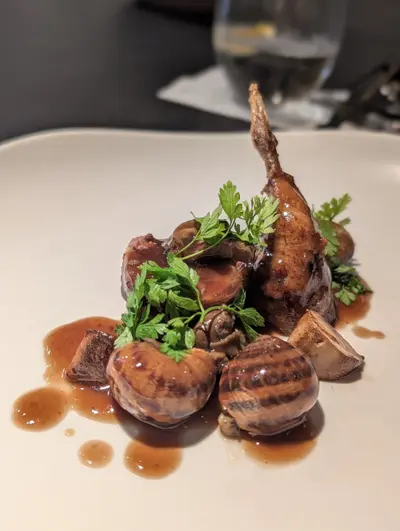
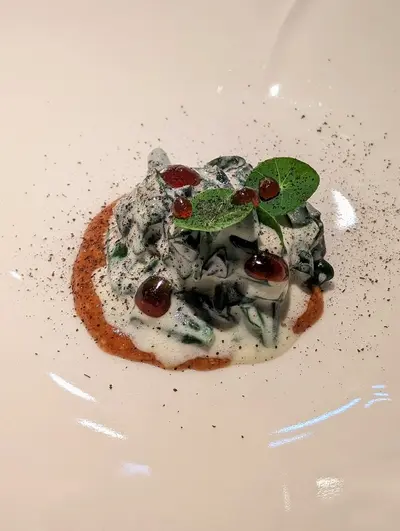
Kaleja, where I went for lunch, is a one-Michelin-starred restaurant from chef Dani Carnero. I sat at the balcón facing the kitchen, which is the seat to ask for. From there, you watch mastery at play: a small, calm brigade moving through service with the kind of quiet precision that you only see in kitchens that have rehearsed it for years. The atmosphere is relaxed and refined at once, which is harder to pull off than it sounds. The sommelier, Paulo (who hails from Venezuela), came to the table for every single course to talk me through what I was eating, even though I had not ordered any wine. That kind of generosity of spirit is rare anywhere, and it sets the tone for the whole meal.
Photography: Natasha Hardy / The Uncommon Traveller
The fifteen-course tasting menu was, for the most part, outstanding. Two of the dishes did not land for me, which I'm noting only because no fifteen-course menu I've eaten anywhere has been perfect, and pretending otherwise feels dishonest. The thirteen that worked, worked beautifully. Carnero builds his cooking around the Málaga landscape (the mountains, the valleys, the coast) and the result is a tasting menu that feels grounded in place rather than imported from somewhere else. Book ahead. Weeks ahead, ideally. Carnero has also recently opened a second restaurant in Málaga called RENÉ, which is widely tipped to pick up its own Michelin star very soon. I'll have to come back for that one.
Photos: Bodegas El Pimpi
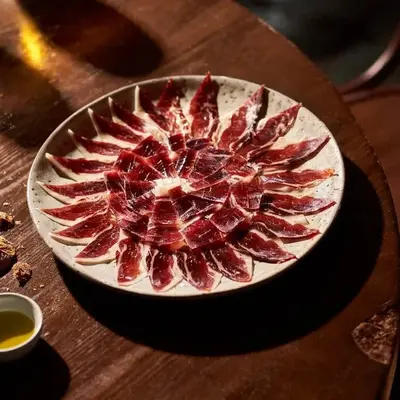
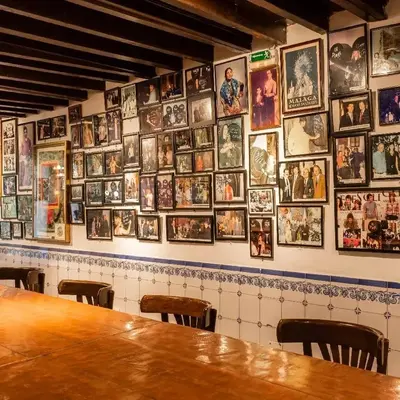
For something more casual, Bodegas El Pimpi is the institution. It has been in operation since the 1970s, the walls are covered in photographs and signed wine barrels, and Antonio Banderas (a Malagueño himself) is a co-owner. The food is honest Andalusian cooking, the wine list is heavy on local Málaga sweet wines, and the atmosphere is exactly what you came to Spain for.
For tapas with a bit more energy, Kraken Centro is a small, lively spot in the old town where the seafood is the headline (the name is a clue) and the seats at the bar are the ones to angle for. For a complete change of register, Ta-Kumi is the city's well-regarded Japanese kitchen, run with a precision that travels well, and a useful palate-cleanser if you've spent three days in a row eating jamón.
Beyond the Old Town
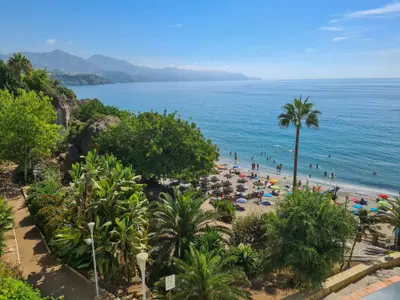
Málaga's beach, La Malagueta, is a fifteen-minute walk from the hotel and is exactly what a city beach should be: clean, accessible, with a long row of chiringuitos (beach restaurants) where the espetos are grilled over driftwood fires on old wooden boats. Go for lunch. Order the sardines, a salad of tomatoes and tuna, and a bottle of cold rosé, and stay until the afternoon.
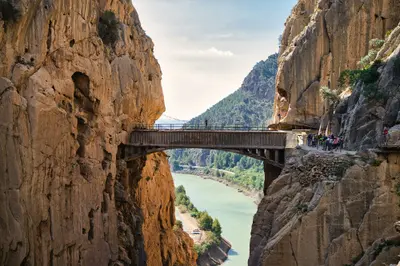
The Caminito del Rey, an hour inland, is one of the most spectacular walks in Europe. A wooden boardwalk pinned to the side of a gorge, suspended a hundred metres above the Guadalhorce river. It used to be famously dangerous (the original "King's Little Path" was barely maintained for decades). It has now been completely rebuilt and is safe, gorgeous, and bookable in advance. Go early in the morning - before the heat - and book early, as the tickets do sell out months in advance during peak season.
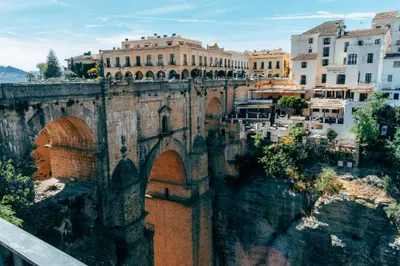
Ronda, two hours away by car or train, is the kind of place that justifies a day trip on its own. The town sits on either side of a hundred-metre-deep gorge, joined by the eighteenth-century Puente Nuevo, and it is the spiritual home of Spanish bullfighting (the Plaza de Toros there is the oldest in the country). Lunch at Bardal, also Michelin-starred, if you can get a reservation.
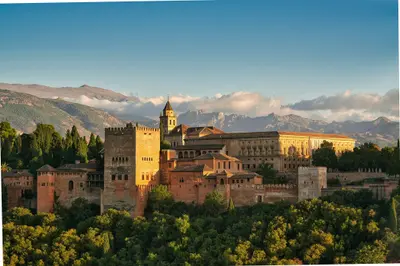
Granada and the Alhambra are ninety minutes away by high-speed train. The Alhambra is one of those places that genuinely lives up to the hype, but you must, must book your tickets in advance, ideally a month or more out for the Nasrid Palaces. After the Alhambra, walk down through the Albaicín, the Moorish quarter, and find a tetería for sweet mint tea.
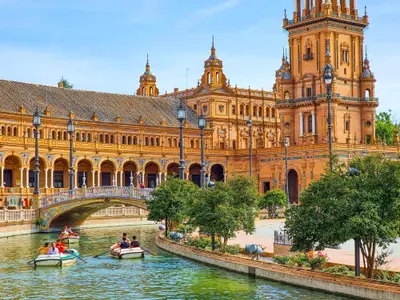
Seville is two and a half hours by train. If you have a day, it is enough to walk through the Real Alcázar and the Cathedral, climb the Giralda, and have dinner in Triana. If you have two days, you can also fit in flamenco at one of the smaller peñas, where the dancing is for locals rather than for tour buses.
Who This Hotel Is For
I could see almost anyone staying at ME Málaga happily. Families with small children, because the location means no car and easy access to the beach and parks. Honeymooners, because the rooftop and the rooms are quietly romantic without being saccharine. Solo travellers, because the lobby bar makes it easy to be on your own without feeling alone. Multi-generational groups, because of those three-room interconnecting suites I mentioned.
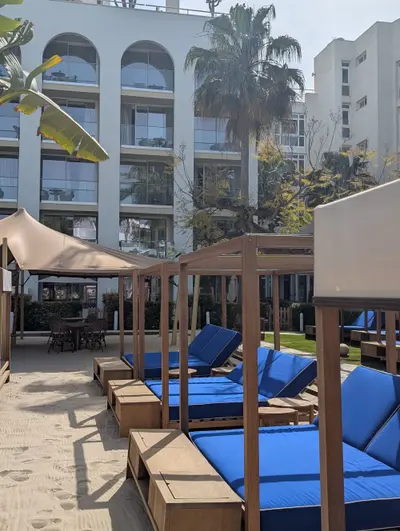
What I'd say it is not for: anyone who wants a resort. ME Málaga is a city hotel, embedded in the fabric of the old town, and its rooftop is the closest thing to a poolside-resort experience. If you want a beach club, lounge chairs in the sand, and a DJ by the pool, that is what ME Marbella (opens in new tab) is for, and it does it well. The two properties are in conversation with each other, and a week split between them is, honestly, my recommendation for anyone wanting to see this part of Spain properly.
Final Thoughts
Málaga is no longer the city you pass through. It is the city you stay in, and increasingly, the city you keep coming back to. ME Málaga makes the case for both. Beautifully designed, thoughtfully sustainable, embedded in the most walkable part of the old town, with a rooftop that justifies the booking on its own.
If you are planning Andalusia, start here. Spend three nights at minimum, four if you can. Eat at Kaleja, walk the Alcazaba at golden hour, take the train to Ronda, and come back to the rooftop for sunset. Then, when you're ready, head west to the coast.
I'll meet you in Marbella.
For more luxury hotel offers in Spain, Europe and beyond, visit our website.

Natasha L. Hardy
Luxury travel advisor and concierge based in Utrecht, Netherlands. Independent affiliate of Fora Travel (Virtuoso). Lived in 7 countries, travelled to close to 70. Speaks English, Portuguese, Spanish, and Dutch.
Read more →